
The Mokoro: Okavango's Original Way to Travel
17/08/2026 · 4 min read
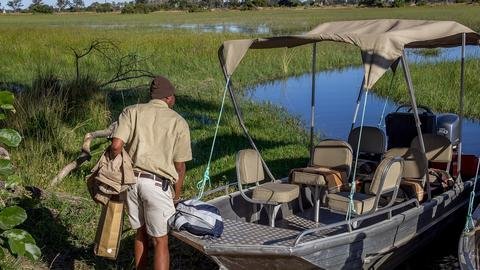
Before engines, before roads, there was the mokoro — a narrow dugout canoe, poled standing up by an oarsman working the shallow channels of the Okavango Delta. It's one of the oldest forms of transport in the region, and it's still the way most people experience the Delta up close.
How it works
Traditionally carved from a single trunk of ebony or kigelia, mokoros are now more commonly built from fibreglass — better for conservation, since it takes fewer trees to keep the fleet running. The poler stands in the stern, pushing off the shallow riverbed, moving the boat forward in near-total silence.
Why it beats a motorboat
That silence is the whole point. A mokoro doesn't scare off wildlife the way an engine does. Gliding through reed-lined channels at water level, you get genuinely close to hippos, elephants drinking at the bank, and the Delta's enormous range of water birds — closer than almost any other form of Delta transport allows. It can feel unnerving the first few minutes, low in the water with hippos somewhere nearby, but it's consistently rated one of the must-do experiences in the Delta for exactly that reason.
What to expect
Most mokoro trips are arranged through Delta lodges and camps, often paired with a guided bush walk on one of the Delta's many islands. Mornings and late afternoons are best for wildlife activity — and for the light.